
Alphabet America
Unspoken cultural allegiances are polarizing this country more sharply than class or gender or even politics. Are America A and America B past the point of reconciliation?

Preface, by Liam (@LegoRacers2)
A spectre is haunting the discourse.
A recent neologism permeates many discussions of American life, providing a new lens through which to investigate the social complexities of that teeming nation of nations.
“America A” and “America B” is the taxonomic classification of two young and rapidly diverging cultural spheres: The first is the society of urbane renters, highly-educated, and self-consciously global trendsetters. The second is the society of suburban and especially exurban homeowners, who are less well-educated and more self-consciously parochial in their own worldview.
Due to its evident utility, this typology has gained a pretty widespread currency across the past year, with hundreds of mentions across Twitter and Reddit and one recent mention on podcast Chapo Trap House.1
As with any novel vocabulary, America A and America B are used about as often as they are misused. Proper usage of these categories are pretty relevant to me, as I created them. It is thus high time, in the face of the whole world, for Liam @Legoracers2 and Jackson @Gracecthdralprk to publish their views, their aims, and their tendencies.
I coined this term in 2023, in Twitter groupchat discussions about widening divisions in American culture and culture-production. I first explained this concept on the timeline in September of that year.2 While there is admittedly huge overlap with the pre-existing terminology of Red States and Blue States, my concept describes a division that is more nuanced and, I will insist, more useful. Fundamentally, America A and America B are not areas, but allegiances. Not only can many, perhaps most Americans be pretty easily categorized into these boxes, but many Americans already understand to which team they belong.
Here is our rough working definition of each milieu:
America A as the small but very influential set of people for whom the cities and inner suburbs, and the economy and habitus that typifies them, are alluring. They tend to be more educated, and tend to be Democrats, but they are not always
America B as the larger but less self-conscious set of people for whom the outer-suburbs and ruralities, and the economy and habitus that typifies them, are alluring. They tend to have less education, and tend to be Republicans, but they are not always
These communities may have more in common than apart – Both are, above all, fundamentally and distinctly American. Each is highly ethnically diverse and solidly middle class. In fact, much of this distinction is seen and exhibited through discretionary spending habits.
And essentially, for both cohorts, aspirations and self-conception are more important than actual lived experience.
If you’ve gotten this far and don’t yet know which type of American you are, ask yourself these questions:
First: If you had $2 million to spend, which of these homes would you make your own?


Second: If you were on a weeklong getaway to Mexico, which of these images would be closer to your experience?


Third: When you hear the name “Jelly Roll,” do you imagine an American musician from 1926 or 2026?
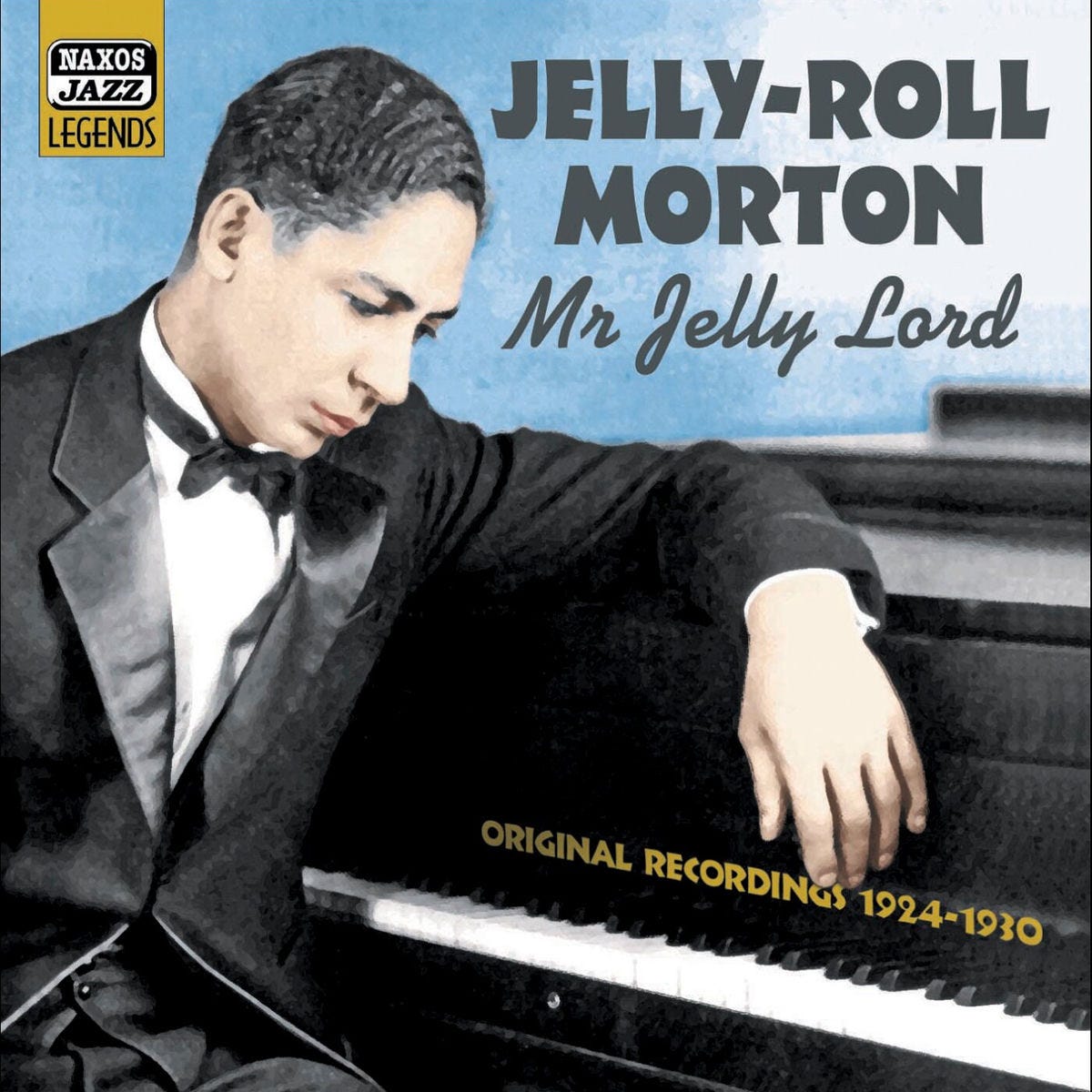
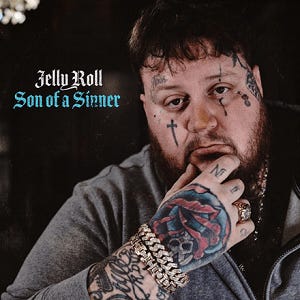
Most Americans aged 18-44 would not hesitate before answering any of these questions. This is to say, even people wholly unfamiliar with the America A/America B terminology already know which team they’re on. Best understood as consumer categories more than anything else, these twin tribes correspond to huge sets of characteristics – from voting habits to food preferences, from vehicle size to home decor, from dog-rearing styles to baby names. A thorough examination of these categories will soon follow. But to understand how this distinction came into being, we must first explore the history.
Beneath the gathering stormclouds of the Second War War, Polish journalist Melchior Wankowicz toured the Kresy borderland zone of his young republic, reporting his concerns on economic backwardness and military unpreparedness of that region. In a 1938 article entitled “We Sow Again in Poland B,” he worried that these eastern reaches were so disconnected from the rest of the nation in its geography and demographics, closer to their former Russian overlords than their new Polish masters, that it would be difficult to maintain their political connection to the heartlands of Poland A. He would soon be proven correct. After being a primary battleground for the most murderous war in world history, what remained of the Kresy region and its inhabitants were lopped off of the Polish state and attached to the Soviet Republics of Ukraine, Belarus, and Lithuania. But as the allied powers giveth just as they taketh away, the reorganized Polish state, now an independent People’s Republic, found itself in possession of huge and extremely valuable swaths of what was recently Germany, now cleared of its ancient German-speaking communities. Wankowicz and other Polish writers found the term now more useful than ever. By 1945 the Polish state no longer contained its former demographic diversity, due to the incalculable toll of the Holocaust, the loss of the Kresy region, and the expulsion of former subjects of Nazi Germany, yet somehow the east-west division remained.
The new western regions of Polish Silesia and Pomerania, newly settled with ethnic Poles, were more urban and industrialized than the rest of the country due to its former membership in the economic world of Germany, rather than the Russian Empire. While the eastern Poles remained in their ox-carts, the western Poles took trains. Some even drove cars! The unexpected and largely unwanted annexation of these territories to Poland would be a massive economic stimulus, first during the period of socialist industrialization, then again in the 1990s with the fall of Communism, and for a third time in the 2000s with Poland’s accession to the European Union. In each of these cases, foreign investment, whether from economic planners in Moscow or bankers in Brussels, would be highly concentrated in the once-German west. While one would expect a borderland territory to grow closer to the heartland over time, the increasing prosperity of the new western Poland relative to the laggard east actually increased regional divisions. By the 21st century, a new Poland A and Poland B were born, without any of the ethnic implications of the former usage, but with perhaps even more visible political consequences. Being more urbanized and more educated, residents of Poland A typically vote for the market-liberal and Christian-Democratic party Civic Platform, whereas those of Poland B prefer the right-wing populist and vaguely theocratic Law and Justice Party.
Though my posts were the origin of America A and B as used today I was not actually the first person to apply this terminology to the United States. An article in Foreign Policy in Focus, written shortly before Donald Trump’s 2016 nomination, declared Trump to be “just a mouthpiece for America B.”3 None of us had read this piece prior to our usage of the term. It was unearthed earlier this year, after the new usage had begun to spread pretty widely online. The piece, which took Trump’s expected loss to Hillary Clinton as a near-given, drew parallels between these two national economies but had no interest in exploring the further social implications of this divide beyond electoral trends.
Though I currently reside in Los Angeles, I have lived for the majority of my life in the suburbs of Kansas and Florida, two states which provide classic (yet politically dissimilar) visions of America B. This has given me from an early age a strong and sometimes overconfident interest in social typologies. Following the 2020 election, in which Joe Biden won off of unexpected gains with college-educated white people that narrowly offset losses among non-college-educated people of color, I became particularly interested in the ways that lifestyle categories, as opposed to immutable traits like race and gender, impact political self-conception.
Around this same time, I noticed the increasing cultural salience of country music, particularly Nashville subgenres such as the infamous “Bro Country,” which combines only a vague acknowledgement toward the stylistic roots of the tradition with production and instrumentation lazily borrowed from hip-hop. This movement was engineered to directly appeal to young white male audiences who eagerly consume rap music, but find something lacking in the experiences and perspectives of black rappers. Put in the context of race in America, the success of Bro Country among the core Nashville audience should not be any more surprising than Elvis. But what surprised me was how popular this music became far outside that target audience. The great resurgence of country music comes from its spread to non-traditional demographics, people who are not rural, not Southern, or not white. What many of these listeners share with the traditional audience is a shared acknowledgement toward a particular vision of the United States and what it ought to be – that is, of course, America B.
The article to follow will follow the A/B paradigm across its social political implications, dissecting the typical inhabitant of each unconscious identity. But first, I want to offer a couple final caveats to the reader.
First, remember that both of these cohorts are definitionally diverse, in class and ethnicity and even in political persuasion. The unwitting belligerents of this tribal conflict come from many different backgrounds. Indeed, a self-aware sense of diversity and inclusiveness is a major part of the America A ethos and this even applies to its conservatives. Right-wing thought leaders, nearly all of whom live in trendy urban district, attempt to beat their liberal neighbors at their own game, with accusations that American institutions are racially exclusionary toward people of Asian descent, and by consistently attempting to portray their own movements as more ethnically diverse than the imagined gentrifying horde of America A liberals.4
But despite this fundamental racial pluralism, the America A/B paradigm cannot account for the unique role of Black America in national culture-production and self-conception. The non-black subject’s anxiety over their relationship toward black culture can reinforce polarization on A/B lines. We see this with the example of Bro Country, and on the flipside, the engagement with white liberals in the 2020 Black Lives Matter movement.
Similarly, many immigrants (though rarely their children) often exist in worlds orthogonal to Americas A and B. The cultural isolation of immigrants may be observed in the difficulty that political campaigns have in reaching immigrant voters. Foreign-born Americans tend to have partisan allegiances that are surprisingly disconnected from ideology. While this is starting to change, immigrants tend to vote on the basis of strategic self-interest (and in light of nativist movements, self-preservation), even if this means voting for Democratic liberals whose beliefs are very different from the voters’.
Religious enclaves also tend to defy this categorization. Utah has been suggested as one of the B-est places in America. While this may be true, and while Mormons exert a sufficient aesthetic influence on all of America B, Mormons do not fit into this aesthetic paradigm any easier than Catholics do. For one, Mormon religious observance is surprisingly austere, particularly in light of the flamboyant architecture of their houses of worship. Mormons too are well-educated, in ways that defy stereotypes and statistics of America B. But perhaps most significantly, Mormons practice a regime of self-discipline and social surveillance that is entirely contrary to the values of either great American tribe. Our era of Oakland cannabis breweries and Myrtle Beach adult popsicle stands has little tolerance for people who avoid intoxicating substances. Sexual abstinence is also an extremely unpopular stance in both Americas, including among the staunchest political conservatives of each. Right-wingers in New York and San Francisco enjoy their tech-world orgies, while their ideological counterparts in Central Florida and Arizona will never part with their swinger’s parties – itself a subculture almost entirely nestled within the folds of America B.
Last, I must caution the reader to not lose sight of the fact that all of the people here described are Americans. As citizens of the most powerful empire in human history, members of America A and America B share a unique perspective and experience which distinguishes them not from each other, but from the other 8 billion on this Earth. Some of the social and psychological differences between these two communities can be mirror reflections of the same specifically American phenomena – including, in some cases, having too much wealth and time and energy and not knowing how to spend it all. Additionally, many of the traits specific to either America are deeply rooted in our history. The link between American Protestantism and American progressivism is of great interest to both myself and Jackson. This specific well is deep, and there is much left to drink. The article to follow will not only clarify the distinction between America A and America B, as well as what these categories are and are not, but also situate this modern division within the 419-year history of Anglo-American culture.
It is possible that these categories will remain salient long after our current political moment has passed, just as fundamental tensions between highlanders and lowlanders, or shepherds and farmers, can survive through a sea change in language or religion or ethnic identity. This is because America A and America B, though expressed often through voting habits, are matters of self-conception rather than ideology. Unless trends in education rapidly reverse, and unless young people stop migrating to trendy and expensive cities for white-collar work, then I expect America A and America B to be further polarized, leading to the widespread acknowledgement of this divide, increasingly targeted marketing campaigns alongside new and humiliating modes of electoral pandering, and perhaps increasingly nasty antagonism toward tribal outsiders – such as America A digital nomads moving their gray-ace polycule to a cabin in Wyoming or Auburn grads with new marketing jobs hoping to blondify the West Village.
Above all, this typology explains identities that clearly exist and clearly impact how our fellow citizens understand their role in this country. Any American with a curiosity in this country’s past and present ought to read the piece to follow, as should many non-Americans with a guilty enthusiasm for our political theater.
Regardless of whether the future of this nation writ large shall be dismal or delightful, a rare certainty is that America A and America B are not going anywhere.
America A and America B, by Jackson (@Gracecthdralprk)
Problems of Analysis
American society has never been less legible. We stumble through our lives grasping at the idea that our old diagnostics, the old heuristics of 20th and early 21st century life, will not fail us, and every time they do. People do not vote how they used to vote; people do not think the way they used to think; people do not want what they used to want. The rules that governed American society since WW2, which seemed to have been brought down from the mountain carved into stone, have shattered, and most people who pay attention to society are left with a feeling of confusion and bewilderment.
This fundamental lack of legibility, the inability for America to conform to anything making any sort of easily-graspable sense, is not new, of course. From its earliest days, it has “contained multitudes,” to quote our national poet. The idealistic descendants of the Puritans, who valued independence and liberty, favored Britain in the Napoleonic death struggle between privilege and right; their southern cousins, slavedrivers and masters, favored the French and their revolt against ten thousand centuries of man’s oppression.
Nor is it contemporary society which has necessarily heightened this schizophrenic, illegible nature in American society. Already in the late 20th century, the more or less rational class and economic interests which had determined the voter behavior, social milieu, and aspirations began to be broken down by the dual solvents of an increasingly mediatized society of spectacle and a shift away from the traditional capitalist industrial economy towards something newer and less physical. The underlying logic of the system, which determined people’s party and social identity affiliation since 1896 or 1865 or 1828, has been diminishing for some time now.
But we have reached an inflection point. Things make less sense, put simply. What previously helped us categorize people based on their economic position, social affiliations, and formative identity categories no longer work. The broad American “normal,” for lack of a better term, no longer exists, at least not in any really motivating and explanatory sense. To speak of what is “normal” for Americans to want, to speak of any sort of true, near-100% experience among ordinary Americans, the famed and mythologized midcentury “monoculture,” has disappeared. More precisely, it has collapsed, crushed by the weight of the digital splintering of the media and the decreasing relevance of mass politics and mass participation in the real world engendered by a fully mature and uncontested financio-entertainment capitalism. How are we to rebuild upon its wreckage?
Many readers will be familiar with the vogue “red America, blue America” heuristic, which purports to explain why so much of America makes so little sense to itself. Under this theory, America is illegible because half(ish) of the country is “red America”: they vote Republican, they love religion and Trump and the flag and traditional American values like faith and family and American nationalism. The other half, “blue America,” are woke, love gender and pronouns and racial justice and socialism and higher education and are critical of Trump and American nationalism and America’s history and its religiosity. If you are having trouble understanding anything about America nowadays, so partisans say, it’s because you are from Red or Blue America, and you fundamentally do not understand the other side.
This is alluring for many reasons. Politics certainly are more polarized ideologically today than at any point since the Civil War. The country, trending towards sectionalism as the electoral college lends itself to, starts to mirror those ideological poles in ways that are demonstrable and obvious. And the culture war, that thrice-damned feature of mediatized mass-culture under capitalism, has put virtually every issue in a “red or blue” divide, with beliefs coded to one or the other political party.
But this analysis misses something. Recall the electoral maps of the last three elections. To be sure, at the state level, there appears to be a crisp divide between red and blue states, even between red and blue regions. But how granular is this, really? Think of a place like the inner Kansas City suburbs or Lawrence in Kansas; these are places in a state that is very “red,” both culturally and politically, but which are noted for their progressive culture and blue voting record. And beyond partisan politics, this misses that, for many people, politics is merely a facet of their lives, something they think about very rarely (if at all, and even if they do, increasingly less so). Does affiliation with the Republican or Democratic Parties on the partisan level, two parties that are wildly unpopular with most people, actually tell us anything about American society writ large, even if we expand the definition of “red” and “blue” to their breaking points?
Enter our solution. We believe that there is a deeper, more explanatory divide running through American society, a divide that, once properly understood, cannot be unseen. A phantasm, which can only be touched once it has been named, watches silently but knowingly over every conversation on Facebook or in the opinion columns of the New York Times. We speak of America A and America B.
“America A/B theory,” as we will call it, posits that the major socio-cultural, with concomitant effects on politics and the economy, divide in American society is not red state-blue state, but between two groups that are defined primarily by their social milieu and their aspirations and their self-conception. They operate on levels beyond the political, and often beyond the conscious, but are firmly rooted in a small-i conception of the ideological. By ideological, we mean in the sense that a religion or a class habitus or a cultural mode of being are ideological; they are ideological categories in the sense that the way that someone thinks about, say, timeliness or manners or proper forms of labor are ideological, rather than the capital-I “ideologies” of the 19th and 20th century (though they overlap).
Let us define our terms. America A is the small but very influential set of people for whom the cities and inner suburbs, and the economy and habitus that typifies them, are alluring. They tend to be more educated, and tend to be democrats, but they are not always. They see their ambitions being fulfilled in the cosmopolitan cities of the east and west coasts, or failing that, their closest equivalent in their home states. America B is the larger but less self-conscious set of people for whom the outer-suburbs and ruralities, and the economy and habitus that typifies them, are alluring. They tend to have less education, and tend to be Republicans, but they are not always. They see their ambitions being fulfilled in the outer-ring suburbs of major metropolitan areas (which they are skeptical about in fundamental way) or the country. If they do not already live there, their ambitions are to get there; more often, they want to stay where they are, or go somewhere like where they already are.
We believe that this constellation of identity markers, ambitions, and small-i “ideologies” better describes the divide within American society than any other, because it gets at far deeper aspects of people’s personalities and worldviews than partisan political affiliation or religiosity ever could. It also helps to cut away some of the confusion and seeming contradictory nature of much of American society, which we will discuss in detail later. More than anything, we believe that the vast majority of people, whether they can name it or not, experience life in America this way more than they do under any other schema of social categorization we have seen.
We were driven to write this article because we have seen this concept, which to our knowledge we originated (or at least adapted into its current usage), misunderstood, abused, and prostituted for various speakers’ own ends. They fight with imaginary interlocutors by invoking America A and B to denigrate and attack, but like the men who crucified Christ, they spread confusion and doubt because they know not what they do. We write this as a corrective, and to light the way forward, in the hopes that this article can serve as fertile soil for the study and application of this concept to grow from.
“The Holy City” – America A

We will start by describing America A, its habitus and its ideology and its aspirations, because they are the most familiar to us. They are our people, as we think they will be for anyone that ends up reading this piece. For a number of reasons we will describe, the types of people who read amateur sociological analysis of American culture, no matter how demotic and layperson-oriented it is, are America A in their hearts if not their mind.
America A is most strongly identified with its emotional and cultural affinity for the city, or at any rate its inner-ring suburbs; if it can walk or take a train into or in a pinch drive into a trendy neighborhood, they are happy. America A people are interested in the kinds of culture, the kinds of people, and the kinds of economic activity that take place predominantly in cities; to a certain extent, we could call this “cosmopolitanism,” though we think this says too much. It’s not that they are cosmopolitan and urbane and cultured, necessarily, moreso that they desire to be those things, or at the very least are open to those things. America A sees the activity, the vitalism, the opportunities to indulge curiosity of the city as a positive, and they want to be in one, or at any rate close to one.
They are often involved in the economy of the city, which is not necessarily associated with any particular class of work. Being a barista in a Tier 1 city like New York or Los Angeles is as “America A” of a job as being a “product manager” at a tech startup, or being a big law lawyer, or whatever. Perhaps this first group are the most America A of all; they live in expensive cities while working for not much money, so their love is most genuine. For those who have A in their hearts but who are not physically located in the cities, they often aspire towards the work of the cities that can be done wherever they live. Often, these are “knowledge economy” jobs, white collar work and bureaucratic work, but just as often these are hyperexploited work in some sort of nontraditional industry, the types of people who work outdoors because they like hiking and are paid pittances. Moreover, anybody who is saving up work at their job that they hate in the boonies to hopefully someday move into a similar role as a waitress or some other equivalent service sector work in a big city truly has America A in their hearts.
The socio-economic-cultural experience of and aspiration towards “the city” is both cause of and caused by the two defining personality traits associated with America A: openness to new experience and self-consciousness. Big Five personality traits have their own problems, not least of which is their lack of precision and their question-begging, but when analyzing milieus, we believe them to be of some use; some groups do, as a rule, tend to be more open to new experience or tend to be more neurotic than others. So, for this reason, we think it apposite to define America A in these terms.
Firstly, they are highly open to new experience. The archetypal America A person seeks out new experiences, and has a curiosity that extends beyond their everyday environment. This shows itself in many ways. They are more open to new forms and contents of art; they are more open to the idea of non-standard gender and identity expressions; they are more open to the idea that there are reasons, whatever they may be, to leave the United States; they are more open to the idea of alternative modes and methods of organizing people, be they the polycule or the communist party. This is the entire allure of the city to America A: it is a place where interesting things happen, and they happen everyday, and they contain true novelty.5
Our culture is incredibly, corrosively nostalgic. It eats away at us, it rusts the gears shut, and it makes it so all of the dynamism of the 19th and 20th centuries feels like it has been arrested by navel-gazing and a childish desire to return home or to walk in the same river twice. America A is somewhat more immune to this than America B. Its desire for new experience, and its self-consciousness that leads it to often identify things that were genuinely bad about the past and about our presence, serves as a partial prophylactic against the desire to look backwards. Let us not overstate this: there is a great deal of nostalgia in America A. It is America, after all. But the nostalgia is of a different sort; it is often aesthetic instead of substantive, and involves a sort of ironic detachment from the actual reality of its context. Think of women who dress like it’s still the 19th century, who love Austenalia and the regency romance and Bridgerton. This woman is far more likely to be in the library than in a subdivision.
Secondly, they are highly self-conscious. America A has a conception of itself as a group-in-itself in a way that America B broadly lacks (though is developing in some ways). America A attempts to position itself within American society in a mental schema: it tries to, for example, understand why its politics may be unappealing to the average voter, as evidenced by the effluvium of articles about what “middle America” thinks about x or y or z cultural trend associated with America A, like socialism or transgenderism or whathaveyou. America A thinks of its interests in a self-conscious way; the archetypal America A website is, of course, Letterboxd, where one curates a sense of what kinds of art they like to consume (how A-coded!) in such a way as to appeal to an imagined observer, tailoring (or perhaps, ostentatiously not tailoring) ones favorites and reviews and activity to reflect some kind of imagined ideal.
It is for this reason that America A tends towards radical politics of all stripes. America A’s politics, though broadly small-l liberal, are open to radicalness in general; there are few communists in America B, but neither are there many Eastern Orthodox converts or self-conscious fascists. Due to their openness to new experience and new knowledge and their overwhelming interest in defining themselves, they are susceptible to radicalism. In a society that is as objectively developed as America’s and in which counterhegemonic ideas essentially do not flow to people who do not seek them out, radicalism is not a self-conscious label applied to oneself by those without high openness to new ideas and high self-consciousness; it instead comes in fits and starts, with bursts of radicalism receding once the moment for radical action has passed. Not so in America A; anyone that has some sort of non-standard political belief, even ones that some of us might consider “hegemonic” like Bernieite social democracy or “gender critical” conservative liberalism, is A-coded.
For similar reasons, America A tends against religiosity, or at least professed belief. To be sure, anybody that converts to some religion out of studied admiration for their rites and rituals and beliefs is surely America A. However, this is the exception that proves the rule. America A tends away from religion because of its self-consciousness and its openness to new experience. The Protestant Reformation, which opened the door to a self-conscious and non-obligatory mode of worshipping Christ, eventually lead to the abandonment of religion altogether as the self-conscious and curious children of the Reformation began to investigate belief in the supernatural, and were self-conscious enough to bother with setting themselves apart from society as it had been. So too in America A. America A, if it feels no natural affinity for the precepts of a religion, will not bother attempting to prostitute it for its own ends; better to better define oneself. And if they do feel affinity for those precepts? They will dive into study of them, ultimately becoming “more Catholic than the Catholics,” or whatever equivalent.
Naturally, neuroticism is the derangement of America A. Perhaps its worst social disease is its self-absorption, its cruelty to itself and to those that it feels has violated some imagined social more or bit of manners. “Manners,” articulated as such, are a deeply America A concern; the same thing is B-coded when articulated as “common sense” or “being normal,” but self-consciously conceived rules of social interaction are A-coded. Most of the worst cattiness, the most casual cruelty to the others based on largely imagined transgressions of some social code of being, the shallowness, the self-obsession, these are the social ills that America A visits upon our culture.
Due to their high degree of self-consciousness and their esteem for new experience, America A tends to be more communal. America A tends to be the group that sees its destiny as most being tied up in and dependent upon the community. One cannot fully know oneself alone; it is only through our interactions with others that we come to know ourselves, and as a group that highly values knowing oneself (really, creating oneself), America A tends towards communal activities and communal politics. This, again, does not necessarily imply left wing politics, but rather any politics that asserts that the destiny of the collective is their primary focus. And in the non-political world, this tends to show itself in the desire for communal recreation and communal identity formation; clubs for adults, such that they exist, like a birding club or a rec soccer league or a literary circle are all profoundly A spaces. Even monocultural activities like sports fandom tend to be about the communal experience of the fandom; we go to see the team to cheer with the crowd, and we watch on TV so we can talk to other people about the game.
This communalism is perhaps best showcased in their ideal living space: the urban or inner-suburban townhouse/bungalow, or failing that a nice rented apartment at reasonable rates. America A cares about the quality and type of its housing; they don’t want to live out in the sticks, away from the action, but in the middle of it all, able to walk to and from things they like and need, not owning a car if possible. Due to these restraints, America A houses tend to be smaller, and less ostentatious.
Property ownership in-and-of-itself is not the goal for America A; they want to own a house or an apartment that has certain qualities they enjoy, in a location they enjoy, and if ownership is off the table as it often is in places like New York City, renting is acceptable, perhaps preferrable. America is a society in which homeownership is a real entry-point into the strata of society that “matters;” politics revolves around them, and they are the assumed political subject. America A rejects this; they will not take any old house in any old suburb, but aspire to live in such a way that their other desires and aspirations can be complemented by their living situation.
This is mirrored in their tendency away from ostentatious displays of wealth, at least displays of wealth that are not in some way mediated by some sort of mitigating factor like irony or supposed utility. American culture, for all of its immense wealth, has been admirably averse to overt and overawing displays of wealth; we like our wealthy men to wear the same suits as any other middle class person does, and we prefer our middle class’s wealth to primarily be embodied in their capital and their property as opposed to conspicuous consumption. This was the political ideal of the 19th century, and was arguably the ideal up through the 1980s, when a small ranch house and an honest life sufficed for most Americans. America A conserves this cultural ideology. Wealth is signalled through dressing patterns, through education, and through property, but as far as conspicuous consumption is concerned, there is relatively little in the way of pure Veblen goods that are aspirational to America A.
Perhaps the one exception to this is that America A is greatly invested in international travel, though this proves the rule insofar as it cannot be “flaunted” in a traditional sense. Perhaps also the city itself becomes a Veblen good of sorts, an experience you can afford, but again, the place that someone lives is so fundamental to their entire habitus that it feels a stretch to call this a “signal of wealth.” This is what America A aspires towards, and like all aspirations, they seek to share their attainment with others to signal social superiority. But they are rarely physical goods.
Openness to new experience and self-consciousness both are, again, cause of and caused by the other major defining feature of America A: high levels of education. Now, America A need not have gone to college; self-education, real autodidacticism, counts as well here.6 But no matter how they come to it, America A must have some level of respect for education, and find it worthwhile to obtain it. This education exposes them to the world in a certain way, and exposes them to different types of people as well; if they accept them, even somewhat, they are well on the road to America A. They need not be “well-read” or even particularly smart; education’s primary mode of exerting onto the America A individual is in its inculcation of a sense of openness to new information and experience, and in the way that it imbeds a sort of self-conscious manner in the people it touches genuinely. Education tells us we must write this way, act this way in class, do this or that in order to pass; those that accept it are marked by it for life, and their milieu reflects this. And of course, one must be open to the prospect of having one’s mind changed and their experience broadened in the first place to seek education out in the first place, so the relationship is dialectical.
This is not to say that everyone with a degree is in America A. Those people for whom higher education is solely a meal ticket to better work, or even more acutely, those people for whom higher education is primarily a networking event or a four year escape from being an actual adult or an excuse to party and partake in a highly ritualized and engineered subculture are decidedly not America A. But for anybody for whom being in college genuinely broadened their horizons, who looked fondly on their experiences of being exposed to people from countries they will never visit and ideas they could never master in ten lifetimes, they are at least on their way to being America A.
This education and their self-consciousness means that America A thinks historically in a way America B does not. It is not a far leap from thinking “what is my place in society? Why? Is that right?” to thinking those thoughts about the past, meaning America A thinks historically in a number of ways. On the one hand, they are simply more into history as a pursuit; to know oneself one must know where they came from. Think here of the “historic district” of any given city in America, the historical buildings and the people who love them and fight to keep them up and make them the cornerstone of their city’s branding to non-residents. On the other hand, it means that they self-conceptualize in a historicized way. They try to get to the bottom of the history of any given political issue; they wonder who lived in their cities before them, and often develop politics around honoring them, alive or dead; they take an interest in genealogy, question family mythology, and generally seek to understand their ancestors (often in politically very fraught and deleterious ways, let us note); and they seek to understand the present in the context of the past, even the quite recent past, which is often the hardest to remember. To America A, history is for the living.
Perhaps this is why America A onomastics tend to be so conservative, in a manner of speaking. America A names are names like “Oliver,” “Theodore,” “Felix,” or else “Constance,” “Rowan,” “Margaret.” They tend to name their children conservatively, almost ostentatiously conservatively, favoring names that people certainly have but which have fallen out of favor in the late 20th and early 21st century, which sound slightly archaic though not wholly anachronistic. We posit that this is because America A is more self-conscious and to think historically. They want their children’s names to have some sort of meaning, to be semantic rather than merely phonetic, so they give them solid, slightly older names, often which have some sort of virtue associated with them or some great man to name them after. And they want their child’s name to be historicized, so they give them a name with a great deal of history behind it, often ones that sound ever so slightly old-fashioned. Moreover, their self-consciousness causes them to recognize that a person’s name has a significant bearing on their quality of life later down the road, and act accordingly.
What, then, is America A? Put simply, it is he or she who feels that their aspirations lie within the city. Perhaps they are economic. Perhaps they are cultural. Perhaps the city itself is merely a metaphor for that great ecumenopolis of the soul, where all multitudes can be contained and careful study and a deft hand mapping the territory promises transcendence. It need not even be the city; Asheville or Atlanta or Minneapolis or Kansas City or Amherst, Massachusetts or Charlottesville or Raleigh-Durham will do just as well as New York City. But in any case, they want to be there, they want to live and grow there, and they want to come to know themselves through others there. They study, they investigate, they self-criticize, they criticize others for their inability to measure up, they seek to swallow life, to be somewhere interesting and happening always.
“The Big Country” – America B
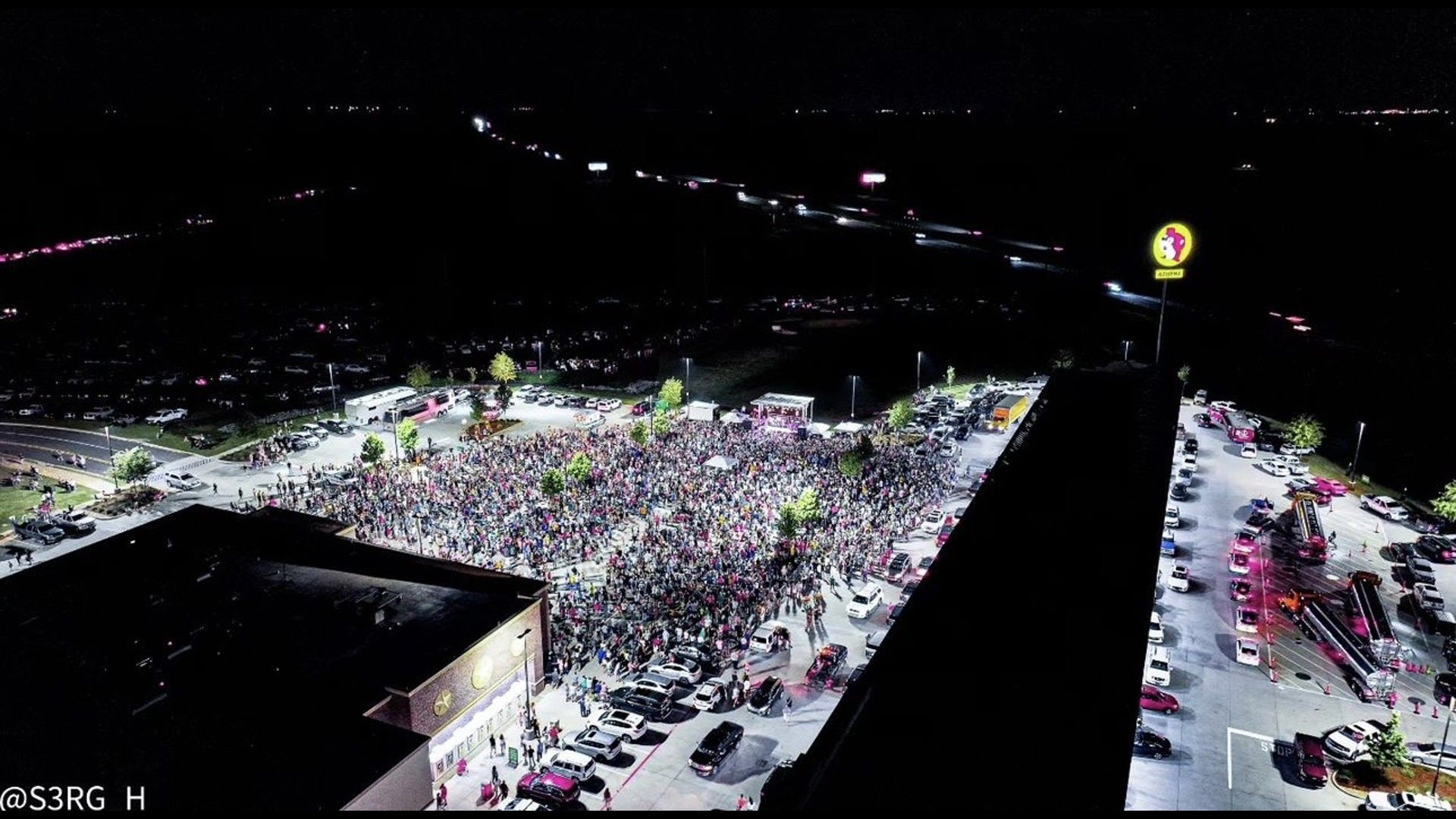
Let us now turn to America B. At the outset, let us clarify one thing: the authors of this piece have little sympathy with America B, its habitus, and its ideology. We disdain to conceal our views and aims; we see the development of America B as an outgrowth of negative trends in American society, and we believe that the ideology of America B is a fundamentally bad one. There are things to admire about America B; a mentality that can, we believe, be salvaged to some extent; and perhaps some remnant of a demotic populist culture that typified America at its best in the 19th and 20th centuries. But ultimately, we see relatively little to recommend America B’s culturo-ideological foundation, and we are its sworn enemies. But one must know their enemy to defeat them. Let us learn.
America B is, converse to A, is most typified by its emotional and cultural affinity for the country, but in contrast to America A, this is an almost entirely fictive and unserious emotional-cultural attachment; really, they are more precisely identified with outer-ring suburbs and general sprawl. America B fancies itself country folk, and many of them genuinely are, but for the most part, their aspirations can only be attained in the suburbs; America’s ruralities dying as they are, there is little recommending the country beyond an emotional attachment to it, and only the most well-off in America B can afford a return to the country; those that already live there certainly aspire to the outer-ring suburb or the sprawl, since they can make more money and have a big house there.
While America A culture is typified by the urban experience writ large, the types of things that could happen in both a city like New York or Birmingham, America B is more specific to the bleeding edge of suburban sprawl culture, namely the Sun Belt. More than anything, America B is the culture of the New South and the Sun Belt made national and aspirational; the archetypal America B destination for a status move is to Texas or to Arizona or to Florida. Housing patterns, which we will discuss, are the main endearing feature of the Sun Belt to America B, but the habitus of the Sun Belt, the large cars and blasting air conditioning and lack of real community and jealously guarded property and “common sense,” are also significant. The culture of the suburban Sun Belt deterritorialized is the culture of America B. It is no wonder that the generalized southern accent of Nashville country music and Texas roadhouses and Florida’s central suburban sprawl has gone national as a sort of America B prestige dialect.
The outer-ring suburb and the country of the Sun Belt are aspirational for America B for similar reasons to the city’s allure to America A. The outer-ring suburb offers an objectively high level of material comfort; the large McMansions, the huge cars, the cheap consumer electronics, the fast food, it is all objectively incredible affluence, especially when viewed historically. America aspires to this, as Americans have since Levittown. However, what makes America B a new force in American culture is that the culture of suburbia was largely a side-effect of the actual material conditions of suburbia; people did not leave Brooklyn for New Jersey suburbs because they wanted to live in a suburban community, they left them because it offered them the ability to own a house and to live lives of midcentury comfort. America B actually aspires to its culture; they see the culture of Sun Belt America and of the dessicated skin of rural America it drapes itself in as aspirational in and of themselves. It is not simply that you can get levels of affluence heretofore unseen in human history for yourself by being there; they actually aspire to the culture that that generates, the music and the entertainment and the habitus and the ideology of those places appeals to them intrinsically.
More on the point about the country’s ultimately fictive place in the America B imaginarium: America B fancies themselves country folk, but this is entirely an expression of affect and self-identity than it is a question of objective belonging to a community of “rural folk,” at least in many instances. The country is aspiration to America B not for reasons it has been in American history (namely, as a place to go to own productive farm property), but for affective and emotional reasons. The country has been valorized, exulted, and deified in the American imaginarium for centuries; it’s little surprise that America B sees it as aspirational for the reason that it has been deified. The country is seen as a font of folksy wisdom, a place where things are simpler (more on this later), where the fixed, fast-frozen relations of an imagined past have yet to melt into air, where the holy has not yet been profaned. They pretend to countryness; the ones who still live in the country appreciate it, though realize that they cannot achieve their goals there on some level. They wear the country’s skin like the flayed princess of Culhuacan, resembling it only in ghoulish and uncanny resemblance.
Like America A, there is a relation to the economy; obviously, their aspirations are the offshoots of the consumer economy that suburban American life produces, and so their interface with that economy is significant. They are involved in the kinds of employment one might find in the outer-ring suburbs; this is a very significant portion of the American economy, and not much can be said about this economy except negatively: the things you cannot do outside of the inner-ring of America’s metropolitan areas are by definition not America B-coded. This economy is often portrayed by Bs and As alike as being more “physical” than the economy of America A, and there is some truth here; manufacturing, middle-man enterprises, “selling” something are all B-coded, though this is not a hard and fast rule. However, this is, ultimately, as much of a pose as their love for the country; plenty of people in America B travel to their offices in outer-ring suburbs in their debt-leveraged trucks and their cowboy boots, and sit in an air-conditioned room moving widgets around their monitor. What differentiates them is that the America B person would wish, may even find a way to convince himself that it is, that the work he was doing was physical, connected to the “real” economy, and not “of the mind” but “of the hand;” he needn’t do anything to further this.
America B’s socio-economic-cultural experience of and aspiration towards “the country”7 give it the opposite ideology to America A: they are low in openness to new experience and are un-self-conscious. Again, the extent to which this is caused by their aspirational schema and economico-spatial lives and the extent to which it is causative of it is arguable; we certainly believe them to be dialectically linked. But analytically, this is what typifies America B.
America B is incredibly unamenable to new experience. Now, this does not necessarily mean that they are constitutionally conservative; far from it, as America B is the origin for many new and disagreeable features of American society. America B is as open to new trends and novelty as any American is, which is to say very comparatively and incredibly in historical terms. However, what typifies America B’s lack of openness to newness is that it does not value new experience-qua-new experience. America A’s affinity for the city is driven so fundamentally by their desire to be somewhere where new things can and are happening every day. America B does not understand this.8 They like novelty and new distractions as much as anyone else, but they do not like them to pose themselves as being fundamentally foreign or alien. America B is more than happy to partake in a new trend, but they prefer it to pose itself as nostalgic or familiar in some sense: the Savannah Bananas are baseball, which you know, but more fun, Buc-ees is a gas station, which you know, but with better food and fun merch. The idea of going to eat Ethiopian food for the sake of discovery of foreign cuisines strikes America B as confusing and displeasurable. Perhaps we could say that America B is less “close-minded” or “conservative” and more parochial.
The territoriality of America B reflects this low-openness. The country’s enduring, unchanging nature has been taken for granted by American culture since its founding; this isn’t true of course, but we are speaking on the level of belief and of aspiration. “The country,” which is an incredibly modern (indeed, post-modern) environment which requires an American consumer economy to sustain, paradoxically also sells itself on its unchanging nature, on its low levels of openness to being changed socially by the vagaries of American life. Again, not true, but this is the belief. The suburbs will always be the suburbs; the people who live there, America B hopes, will always be the same types of people, and the built environment of tract houses and lawns and sprinklers, are imagined and desired to last forever. One might think this would lend itself to an appreciation for history and to the history of place, but we will explore why that is not true presently.
America B is, subsequently, incredibly nostalgic. Think of the prototypical America B entertainment, Nashville country. Nashville country is America’s folk tradition, country and western music and the music of the Scots-Irish reivers of Appalachia, put into a hydraulic press; the oil that runs off this tradition is further refined, like a plastic, with modern production techniques and aesthetic preferences until it becomes a highly modular, almost inhuman work of pseudo-art. But it is not sold on the idea of being what it is, a highly engineered form of sound that bears almost no resemblance to anything in its “tradition;” instead, it is marketed with and drapes itself in the trappings of America’s dying rurality, of nostalgia for days in which things were simpler and perceived enemies would never “try that in a small town.” America B wants to be lied to, to be told that the incredibly modern and post-modern economy that gives them the material comfort they need and which generates the culture they aspire towards are in fact old, enduring, and pre-modern. If things are new, they are aestheticized using old patterns.
Perhaps we might say that where America A values the lindy, America B values the nostalgic. For those unaware, something is “lindy” when it has been genuinely long-lasting and has maintained itself more or less unchanged for a great period of time; if a cultural more is 500 years old, one expects it to last much longer than one that is 5 years old. America A admires this; lindy things are by their nature not particularly conspicuous, so require a certain level of self-consciousness to discover as lindy. But America B doesn’t really care if what they are seeing or experiencing or doing is actually old; the appearance as such is enough to give them the assurance that something which promises to endure gives.
Like their parochialism, America B is also America A’s Janus face in their low self-consciousness. America B broadly does not consider that anybody would want to or might legitimately desire a different way of life than they do; they do not see it as legitimate, and on some level think that they must be faking if they, for example, want to leave their outer-ring suburb for the city. They are not self-conscious about themselves in-and-of themselves, either. America A is constantly hounded by the fact that they make a legitimately small if very culturally powerful segment of American society; America B does not consider this at all, and doesn’t consider that anybody might not share in their weltanschauung.
This lack of self-consciousness extends beyond their self-conception and to their interests and to their media habits as well. Typical America B fare tends to be lowest-common denominator, direct, and for-itself without really being conscious of-itself. Think of Nashville country; this is music that is so algorithmic that AI can already passably create it without any human input, so generic that one can construct an entire song that consists only of country industry singers singing the phrase “cold beer.” It is not self-conscious; it is not aware of genre or its history and does not attempt to understand it and innovate. But it is also for-itself in many ways. It is not for general consumption, though it is often imagined to be. Someone with no emotional or cultural attachment to Texas and Tennessee will resonate with Ella Langley’s “Choosin’ Texas,” perhaps America B’s aesthetic Austerlitz, meaning it has become a mega-hit despite passing largely unseen by America A and other people who bestride the margins between the two.
Or think of shows like Yellowstone and Tulsa King, which are not so much paeans to middle America as they are paeans to specific places within America that are emotionally and culturally resonant to America B: the frontier town where a family has owned a ranch for multiple generations, the interaction between the most suburbanized major metropolitan area in the country and the largely lost world of Italian organized crime.9 These shows are big hits, but they are not big hits in the way that midcentury fare like MASH was; they appeal to a dedicated, culturally coherent, but largely siloed away slice of the country (though growing) that resonates greatly with it. Note that both of these shows are Paramount Network exclusives; they do not air on the big, 20th century alphabet soup broadcast networks, but a comparatively minor network analogous to AMC that began its life as (and this is so incredible as to feel literally “non-credible”) “The Nashville Network.”
As a result of their low self-consciousness, America B abhors radical politics, at least radical politics so-conceived. Sure, much of the politics of those in America B are indeed quite radical in the context of American society since 1945: almost every pigbrained plan for the total deportation of illegal immigrants would result in a population transfer that would rival the great and terrible ethnic cleanses after World Wars 1 and 2 in scale. But they are not conceived as such. America B’s politics are self-consciously common sense; they don’t want to think of their ideas as coming from any sort of studied response to the problem of the day, but instead from a simple reading of things “as they are” and taking “the most obvious” solution from there. This is fallacious, of course, and leaves them liable to being blown around by skilled media operators, but this doesn’t matter much to them; the benefit of a politics of common sense is that it doesn’t much matter what happens except in times of extreme crisis, because America essentially runs itself.
And mirroring America A, they tend to profess a higher level of religious faith than America A. However, we stress profess incredibly strongly here. Religious attendance has fallen off a cliff in American society; vast swathes of people are unchurched, have not been baptized, etc., and lack even the rudiments of religious practice that even the most anti-ritualistic Calvinist protestants would have abhorred as godlessness. America B is not much different; they may attend religious functions (preferrably at some charismatic, non-denominational evangelical institution, though if against such things for cultural reasons, Christmas-and-Easter attendance at some suburban Catholic church will do), but for the most part religious belief is professed rather than lived. America B claims to be religious, but this means very little other than belief in some largely imagined tenets of Christianity and their desire to belong to “the religious” as an identity category. They may or may not actually have faith; in all likelihood, “superstition” is a better descriptor of their beliefs. But what they do have is a desire to be perceived as religious, to use religion’s gravitas and its primacy in American culture and its cultural and spiritual legitimization capital to ingratiate themselves into the ranks of “the righteous.”
If neurosis is the derangement of America A, America B’s is ignorance. They are mirrored, of course: neurosis coming from thinking too much about something, ignorance from thinking too little. America B’s worst feature is that it encourages ignorance, lack of curiosity, and living “the unexamined life.” Great crimes are committed in the name of and as a product of ignorance, and most of the crimes of America B, the wastefulness and the overconsumption and the xenophobia and the lack of a desire to improve anything in any large and necessary way for fear of their own temporary inconvenience, come from this great sin. This is not to say that America B cannot be judgey; they can, and are, but for different reasons than America A. They judge others for their inability to measure up to some unexamined and broadly received (from culture or from industry, often from the culture industry) standard they judge to be perfectly fine to hold people to.
America B, with their love of “the country” and their nostalgia, seem as if they would be natural constituents for a communal way of living, but this is not true; America B is in some ways radically individualistic, insofar as this is aspirational and means absolutely nothing about the need to examine oneself in order to actually be an individual. America B’s ideal is the cowboy, as America’s was at many points in time, but a cowboy that can drive a truck and get steaks at the grocery store, not one actually struggles against the cruel earth to make enough money to survive another cattle drive on the high plains. In some ways this is a product of the suburban environment and economy: the goal is, after all, a house of one’s own, fenced off from the neighbors, which one can sit in and partake in whatever it is they want to partake in, mostly alone. They don’t live in places where neighbors know each other and have to work together to solve problems together like residents of an apartment building sometimes do. They are, of course, not particularly unique people (they share this with America A, to be clear), but they think that they are, and they want to be, or at least do not wish to actually come to know themselves through interaction with others.
Their ideal living space is, then, the McMansion in the suburbs. It is big; it costs a lot of money; it signals, in some way, that the owner has “made it” in American society. They don’t want to live in a space that they feel is not their own, with people they don’t really know, who they can’t get away from if they want to. They want to live in a house where they can shut themselves off from the outside world, which is admittedly incredibly annoying and frightening, and pursue their interests in peace. Their ideal houses are large, they are undecorated (who could have enough possessions to fill these houses? who could have enough of a connection with enough objects to fill out a home if they are prone to not thinking about them at all?), and they are well-enough away from the city center but near enough to consumer goods to enable them to live the lives they have always aspired to, with no one else there to bother them save their family.10
Unlike in America A, property ownership is the goal. The location of the house, the neighborhood it is in, its proximity to interesting things (often even its proximity to work; they will drive for an hour and a half both ways to get there if it means property ownership); none of these matter too badly. Property ownership is the goal in-and-of itself. And why shouldn’t it be? This is America B at its most clearsighted, in some ways: American society is a society of property holders, and anyone who rents is essentially a political constituency akin to an ethnic minority rather than one akin to a class. If consumer American society and the culture it has generated are the thing one aspires towards, why not simply buy as big a house as you can afford, and use it to enjoy that culture?
While the location of the housing is not of paramount importance, America B does tend to favor ostentatious displays of wealth. This is, as we have pointed out, a neoidea in the context of American society; we’ve always aspired to property, but we were supposed to be humble about it.11 Not so in America B. Expensive trucks, expensive watches, and expensive mansion-like homes, food that is not “haute” but is nevertheless expensive like steaks, expensive cosmetic surgeries; these are all hallmarks of the culture of ostentation in America B. While they are defined by their aspiration towards “the country,” there exist some cities that are distinctly B-coded, and Miami typifies this culture of ostentation to a T. Unlike in New York City or even LA, where the average person moves to carve out a small but meaningful corner to experience the world for themselves from, Miami offers the promise of a platform which you can display the luxuries you own from, whether they be the car or the watch or even the physique (bodybuilding is an America B phenomenon).
America B is more amenable to Veblen goods than America A, though this can be overstated. The archetypal America B luxury is the large truck; often, this is financed at usurious rates, and eats up multiple thousands of dollars of their paycheck every month. This is significant because, while the large truck is ultimately a luxury and unnecessary in a sense, it’s also not entirely a good whose only utility comes from its consumption and display for status purposes. The truck does legitimately get you to work, but 90% of its utility is in the signaling: I am the type of person who can afford this huge truck, and possibly even more importantly, I am the type of person who needs this huge truck. I work in the country, I work with my hands, I may need to use the bed for something someday (this is rarely true).12
Educationally, America B tends to attain lower levels than America A; why should they, when the unexamined life in “the country” rarely, if ever, requires it. However, a more interesting facet of America B culture is that those who do attain higher levels of education do not value it in-itself. For America B, education tends to be instrumental; what can the college degree get me, what can going to school here do for me, will I have fun outside of class while I’m there. A typical college major for America B might be nursing, or political science (the non-radical type; political radicals are America A, remember), or engineering at the higher levels. These are studies that are wholly instrumental; very few people study nursing for the love of the subject.
One of the most interesting trends of the 2020s is that students from states like Massachusetts and Illinois and Michigan, states with the best universities on the planet, where the life of the mind is as attainable as it is literally anywhere else, go out of state to attend SEC schools.13 This was not really a trend before our contemporary era; people who were not really into school for its own sake in places like this went to the state school, if at all. Now, due to the mediafication of things like college football and sorority rush and the general Sun Beltification of American culture, kids who may very well have gotten into Harvard or even Michigan/Ohio State (schools with great college football but lacking that Sun Belt America B flavor) go to Alabama or Ole Miss or Clemson to partake in rush and watch football. College is instrumental for them, but it’s also a part of the same kind of culturo-social signalling culture that leads them to country music and the big house in the suburbs of Tallahassee or Dallas or Nashville.
America B looks fondly on its college experience if it has any, but for reasons entirely different to America A. Learning has very little to do with it; more important is the social aspect, the sports, the fraternity or the sorority, the clubs, the sex, the alcohol, the drugs, the lack of responsibilities, the freedom from adulthood. Their minds may broaden regardless; college education makes someone more small-l liberal pretty empirically, so it’s not like they’re not paying attention at all. But primarily, these days are in service of hanging out, having fun, and killing time until they can get their credentials to move onto work that will hopefully take them to the Nashville suburbs, to feast forever in America B’s Valhalla.
This disdain for education and low self-consciousness means that America B does not think historically. And again, why should they? The suburb is a place that almost deliberately does not have a history; it is supposed to have never changed since its construction, and will never change. The country (not “the country”) contains all the history that they need, and it is kept simultaneously close and at arm’s length; they are interested, to some extent, in the past-as-national-mythology, but beyond this, there is little interest in the past, and even less interest in really grappling with and interrogating the past. They do not self-conceptualize historically; they see themselves at best as a product of suburban American society, and at worst as the natural state of contemporary Americans. History is, for America B, something that they like to cloak themselves in, something that they aspire towards (old-fashionedness, something durable, something that is “traditional”), but because it is aspirational for instrumental ends, it is not an actually very often-attained thing. Genuine preservation of historical traditions, even very “folksy” and demotic ones like bluegrass music or the folk dances of American westerners, are the domain of America A. The facsimile will suffice for America B.14
We might say that America B desires tradition, but not history. This is a common attack levied at political conservatism, but what makes it an America B phenomenon instead of a politically conservative phenomenon is that this desire is for-itself. America B does not mistake empty tradition for history; they affirmatively desire their traditions to be unmoored from history. It is a function of their low-openness to new experience scraping against their identification with consumer society like the iceberg along the hull of the Titanic: to synthesize the two, one must desire a tradition that is in some sense novel.
For this reason they are open, susceptible, perhaps “gullible for” appeals to American mythology and disdain anything about the teaching of history that is critical of this mythology. History is for the living, yes, but it is meant to comfort and motivate the living in doing what they were already doing; to criticize it, try to understand one’s place within it, these are alien desires to America B, and they often react quite violently to attempting this.
Because they tend to be very down on actual tradition and very low in self-consciousness, America B onomastics are incredibly new. The typical America B names are things like “Brayden,” “Tanner,” “Jaxson,” or else “Kayleigh,” “Reagan,” or “Lakynn”. For America B, the name does not convey any semantics to the child it is given to; the entire purpose of an America B name is to “sound good,” its value being entirely phonetic.15 The -ayden or -aylen suffix is especially common; this originally formed in the 90s due to a process of smashing up already-extant names (in this case, Jason and occupational/locational surnames like Braden or Jordan) and gluing them back together. This latter point, the occupational surname used as a given name, is especially common. America B abounds with Tanners, Bakers, Carters, Hunters, Coopers, and Fishers; all they need are some Millers, Summoners, Pardoners, Manciples, and Reeves and they can start on their way to Canterbury.
We also see a complete disregard for the actual conventions of spelling in America B onomastics; Jackson (already a surname used as a given name) becomes “Jaxson” or even “Jaxon,” and the “-ly” particle found in women’s names like “Carly” or “Kimberly” becomes “-lie” or “-lee” or even “-leigh.” Their individualistic aspirations, their complete disdain for actually conserving anything that does not instrumentally help them towards their consumerist suburban aspirations, and their lack of self-consciousness (people with non-standard names tend to do much worse than people with standard ones at e.g. getting a job) means that America B onomastics bear little resemblance to anything coming before it in the English language.
If America A is the town as an aspiration, then America B is its funhouse mirror reflection in “the country.” They aspire to life in the country as reflected through the economy and consumer culture of the outer-ring suburbs; they aspire to life there, a life of leisure and of ostentatious wealth and of individualism where they can essentially “opt out” of society in their own little bubbles. Often, it is not even a territorial suburb or rurality they aspire to; it is often simply the idea of contemporary Jeffersonianism, of owning enough and having enough pleasure that one need not think about much of anything, the ideology of those that strive towards leisure and passivity. This is, again, a new development in American culture; the yeomen of the 19th century frontier never expected to be able to stop working, but rather to get enough to prosper from their work. But a storm blows in from heaven, and it propels America B away from this problematic but in some sense noble pursuit of prosperity in return for work and towards something darker, something more hollow, something different. It drives them towards Nashville and Florida and Dallas, it drives them towards Bryant–Denny Stadium, and it drives them, we fear, towards our collective destruction
What America A/B Theory Does and Does Not
It’s not a secret that our writing of this primer (manifesto?) was initiated by seeing people using our theory in ways we find imprecise, infelicitous, or incorrect. People have observed our usage, perhaps seen the things we have said about it informally, and run with it in their own directions. In some instances, this is to be expected. Combatting more radical wings of the Protestant Reformation eventually killed Martin Luther, symbolically if not literally, and we do not seek to follow the monk from Wittenberg down the same path. But we do see some level of theoretical clarity as necessary in order to accurately talk about this phenomenon, so we seek to correct a few of them presently.
The main mistake that people make is thinking that America A and B are territorial. This is understandable, as they are indeed spatial, having to do with the physical space of either the city or its outer suburbs. However, this is incorrect because they are primarily aspirational towards these spaces, and especially to the culture associated with these spaces, rather than actually the spaces themselves. Media, the Internet, and globalization have made it so that people in the middle of nowhere Ohio can aspire to live in LA or New York City, and city kids in Philadelphia or Orlando can aspire to live in Miami or Nashville’s suburbs, and aspire towards their culture. When we see “honky tonk” bars in Chicago or the hyper-woke coffee shops in small-town America, we are witnessing a paraphrase of what Christ said: the Kingdom of America A or B are within you.
It is also not a substitution/reskinning of “red vs. blue” politics and analysis. Yes, Democrats tend to be America A, and Republicans tend towards America B, but they are not 1:1. Consider the Republican intelligentsia, your Supreme Court clerks and your Peter Thiels and your JsD Vance. These are people who are highly educated, disdain the country that they rely on for votes and would never live there unless they had some sort of huge city-like compound to retreat to, and are both highly neurotic and highly self-conscious. They have A in their heart as much as any blue-haired barista in NYC does. Think of Nick Fuentes, as chudded a man as they come, saying recently that he could never live in Oklahoma and prefers living in diverse, liberal Chicago. One need not be liberal to be America A, they must only derive more pleasure and actualization from the life of the neurotic city-dweller than its opposite.
So too are there some liberals and Democrats in America B. Georgia and North Carolina and Arizona are states that have trended left lately for a number of reasons, often involving influx of America As to cities like Raleigh and Atlanta and Phoenix, but also because the Republicans have effectively destroyed much of their credibility in outer-ring suburbs due to their Year Zero-like attacks on many of the foundational pillars of America B society, the promise of the McMansion and great wealth to be found in the suburbs chief among them. America A/B is not just red state-blue state; it gets at something deeper, and in our opinion, more explanatory.
We also must say that not everybody is a member strictly of America A or B. Every person is somewhere in between the two poles; there are things within them that pull them more towards one or the other, but they contain multitudes, as Whitman says. Some people with Bness in their heart still aspire to college education and urbanity in some sense because they understand it confers prestige, maybe even that their faith or their milieu values it intrinsically. Some people in America A admire aspects of B culture, often ironically but occasionally post-ironically. This is not meant to place people into Harry Potter houses; it’s meant to analyze two poles of our culture, which people are weakly or strongly attracted to but are ultimately their own people.
And ultimately, it is not a value judgment to call something America A or America B. We have been clear that we are members of America A, that we disdain many things about B culture and view it as a new, dark threat to the actually good parts of American society and culture, such that they exist. But we would not say that America B is a wholly negative phenomenon. There is a root scar of American populism that runs through America B that we genuinely admire, the folksy and good-hearted worldview of William Jennings Bryan or the Republican yeomanry of the 19th century, the people that value their independence and desire to not live under the heel of big capital and the exploiters of the old world. Compare here David Hackett Fischer’s ideas in Albion’s Seed about backcountry Scots-Irish notions of freedom as “natural liberty,” the ability to live free from constraint and to live near a Rousseauvian state of nature, where men are good and do each other no harm. There is much of this in America B’s thinking, though tinged with the altogether more negative idea of freedom as freedom to own and to dominate. We even find some America B culture to be fun and interesting.16
And there is much to dislike in America A culture as well. We have already discussed the neuroticism, the vanity, and the self-absorption that America A is often capable of. Perhaps their greatest sin, and it is great, is that they can be incredibly cruel for reasons that are not really deserving of it, whereas America B’s cruelty is more primordial and bestial and remains caged except in times of crisis. The suburbs dream of violence, to be sure, but the cities occasionally dream of something altogether more frightening: a rigid, mannered society where “types of guys” and “vibes” are discriminated against in language too cruel for its tiny footprint. When you see someone talking about “getting the ick” from something minor, being cruel about some person sharing something earnest about themselves, or anything of that sort, you are watching America A at its ugliest.
Problems With Our Theory, Freely Admitted
Our theory is not all-encompassing; there is much that it cannot explain, and methodologically it is debatable in some very fundamental ways. It is to these blindspots and counterarguments we will now turn.
The authors of this article are Marxists by intellectual inclination and by political conviction; we are interested in history that comes from the bottom up, history that examines the material lives of the vast majority of people to tell its story. What are we doing pushing a theory that largely says that the main split in America is an idealistic one of aspirations and cultural milieus? This is a fair criticism, but one we have a better answer for.
Firstly, we believe that these factors are ultimately downstream of the economy and production in a broad sense. America B’s culture is entirely a product of the economy of consumerism and suburban living; the base informs the superstructure directly in this instance. And America A’s culture is also ultimately downstream of the knowledge economy and the intellectual culture generated by this specific method of organizing an intellectual and artistic industry; society with the nightly broadcast television show gives you monoculture, society with HBO Max gives you America A. Both of these cultures have roots in the material.
Secondly, in a deeper sense, we see this in line with the deeper trend away from direct material politics and culture and towards a more obfuscated, mediated politics and culture that have emerged since the 1990s. For much of the 19th century and almost all of the short 20th century, the primary way of grappling with material concerns and material conflicts was directly: the proletariat fought its battle with the bourgeoisie directly, fighting the bourgeoisie as the bourgeoisie. However, since state socialism’s worldly defeat in 1989 and 1991, the world has retreated into the mode in which these conflicts have been fought since time immemorial: filtered through some socio-cultural conflict. The 21st century fights its material conflicts out irregularly and mediated, like Protestants and Catholics fighting over Europe at the birth of capitalism. America A/B is just another instantiation of the old town-country dialectic, but masks real material differences.
Two Great Cultures Directly Facing One Another
America A/B theory, we hope, can serve as a corrective to the hazy, unfocused, and orthogonal theories that have captured people’s attention like red-blue conflicts or education polarization or what have you. We freely admit that our theory cannot explain everything; much of the world is quite complicated, and categorizing something always generates exceptions and edge cases.
America A and B do not imply any sort of action or demand any sort of uniting politically or socially. They are what they are, nothing more, nothing less. We merely hope to clarify, and to aid others in seeing what is happening in America. America A/B theory is meant to take the scales away from our eyes, to clarify the landscape, and to help us navigate an increasingly illegible and unreadable landscape, a country that appears more and more schizophrenic and deranged by the day. America is a lunatic asylum, to be sure, and we only hope to better describe the patient’s behavior to help in its treatment.
The origins of social behavior are, to us, incredibly liberating, because to know something is to understand it, and to understand something is to be able to live in and alongside it. The origins of American culture in the 18th century, for example, leave traces that are omnipresent even in contemporary life, and they help us to navigate America in a way that is intellectually consistent. We merely hope to expose that which cannot be unseen, to teach that which cannot be unlearned, and to help us to see the strands of truth that run hidden in front of us like spiderwebs, thin and translucent but tangible and real.


A recent work of transphobic AI slop from the White House contrasted an image of a happy brown couple reading to their children with a white drag queen, and favorably juxtaposed dark-skinned athletes beating a white cis woman at track and field over a white man beating her.
To this, we must tip our hats to the Lindyman @PaulSkallas, an execrable figure in some ways but a highly original mind worth engaging with; there does truly exist in America A a “cult of the city,” where just being in a city like New York or San Francisco or Los Angeles is worth sacrificing, even suffering actual hardship. For America A, there is something to be gained from the city other than money. It is a place to belong, and a place to aspire towards.
Consider the author’s friend, who lives in New York City, writes for a political publication, and is generally a seriously intellectual person, who did not go to college and worked for UPS.
This one is actually a scarequote; assume if I say “the country” from here on out, I am speaking of the outer-ring suburbs pretending to be the country.
Astute readers will note that we are defining America B, and have described some aspects of America A, through their negatory positioning towards some aspect of A/B culture. This is not accidental. These identities form as much in opposition to each other as they do in-themselves. Does anybody doubt that America A considers the uncultured B in their ironic enjoyment of trashy pop culture? Does anybody doubt that America B resents the sneering A when enjoying Jelly Roll and the pedal pub?
Despite being an urban phenomenon, organized crime (really, white organized crime) is an idée fixe for America B: the Mafia, the Irish mob, even Tommy Shelby’s Peaky Blinders. Perhaps this comes from a fantasy that these men represent something simpler and more traditional than their own lives resemble: patriarchs dispensing rough justice in ethnically homogenous communities. America B never fails to aspire to largely outmoded forms of social violence they take to be more “real” than our own more effective, largely indirect technologies of domination. A YouTube video entitled “Tony Soprano Owns Liberals: Shows Us the Meaning of Hard-Working Italians currently sits at 1.6 million news.
What decoration exists in an America B home is often the sort of faux-cursive, inspirational word-art often lumped together as “live, laugh, love” aesthetically. Why word art especially appeals to them, Allah alone knows. Perhaps it is a dim cultural memory of the austere protestantism that their faith traditions largely stem from? Perhaps their disinclination towards artistic interpretation means that they want “art” that communicates its message as directly as possible?
We have our theories about this; in some way, it’s a very European/third world view of wealth. We assume the way into American culture was the globalized internet from places like Instagram. Instagram’s influence on culture will probably feature in another article for this publication.
Per a 2019 study by research firm Strategic Vision, 75% of pickup truck owners never use their truck to tow another vehicle and 35% never even load anything in their truck bed, instead leaving the pickup's defining feature as a vestigial organ.
A recent article on this point interviewed significant numbers of Northeastern students who decided they had to attend an SEC university. Count how many of these enrollees even gesture toward academics.
With regards to this point, think about the typical patron of a bluegrass music festival: yes, plenty of real rural folk play and enjoy the music, but the real listener base is in educated America A circles, more your Alan Lomaxes than your Jelly Rolls. Think even of the origins of bluegrass and other American folk music’s modern revival. It owes more to the Communist Party than to any constituency of suburban consumers.
Whether this is true or not is beside the point.
Much of America B’s culture gives a sort of je ne sais quoi pleasure in partaking. We confess to enjoying Buc-ees quite a bit, as a Thompsonian gonzo vision of American consumer society that also happens to employ capitalism’s incredible productive organizing power to give you good food and cheap gas.
This is mostly well-said, though I fear a containment breach. Well-meaning "America B" folks likely won't take kindly to the paternalistic prose of marxists. Looking forward to your future writing!